S'inscrire au fil RSS

The first time I played Snow Rider , I thought, “Okay, this is just a quick downhill rush.” Like, I’ll hit a couple runs, get the hang of the controls, and move on. Yeah… that lasted about ten seconds. The game immediately grabbed me with that automatic downhill sprint—the kind where your sled is already flying before you’ve even finished thinking about the last mistake. Then the track started throwing obstacles at me like it had somewhere to be: trees that feel like they’re placed specifically to ruin your day, rocks that catch you mid-turn, and those weird snowmen that you swear are just standing there menacingly. It’s an endless runner, so there’s no calm “beat the level” moment. It’s nonstop speed, nonstop decisions, and the constant feeling that one tiny hesitation is going to turn into a wipeout. The core rush: reflexes plus survival mathHere’s what keeps Snow Rider addicting: you’re always doing two things at once—steering through chaos and staying mentally ahead of what’s coming. The game doesn’t wait for you to catch up. You have to look down the slope early, not just react to the thing right in front of you. I’ve had runs where I’m gliding through the early stretch like I’m some kind of snow god… and then, out of nowhere, the track tightens up. That’s when you realize dodging isn’t just about dodging. You’re managing space, momentum, and timing. And because it’s an automatic rush, “almost” doesn’t count. If you’re too focused on one obstacle, the next one appears like a jumpscare. Difficulty ramps up in the most rude way possibleThe best (and most cruel) part is how the difficulty escalates. The lanes start feeling narrower, the steering margins get smaller, and suddenly the game throws in sudden gaps—those moments where you have to decide instantly: do I dodge, do I jump, do I commit? I learned the hard way that split-second choices aren’t optional. There’s this specific kind of panic when you see a gap late and your brain goes, Jump—no, swerve—wait— and then your sled takes the path your hesitation “picked,” not the one you wanted. After enough near-misses, you start developing jump timing instincts. Not perfect, but good enough that you stop feeling like you’re driving blind. The gift box grind (aka: my favorite way to lose)Let’s talk about the gift boxes. I know I’m not the only one who gets tempted the second they appear. They’re high-risk, high-reward—exactly the kind of distraction that turns a smooth run into a gamble. The game basically dares you to detour or time your jump to grab them because they help unlock cooler sled designs. My rule used to be simple: “Don’t chase collectibles when you’re near danger.” My rule lasted about one run. I’ve had runs where I spot a gift box and think, I can grab that easily. Then I squeeze past an obstacle, commit to the detour, and—plot twist—what looked like a clean angle becomes a pixel-wide escape. Sometimes you get it: clean jump, box secured, and you’re rewarded with that “I’m building something cool” feeling. Other times? The box is the reason I eat snow. But honestly, I think that’s why it works. It turns the game from “survive forever” into “survive forever with drama.” Pro survival tips I actually useIf you want my real-world survival habits, they’re boring until they save you: First, look ahead more than you think you need to. I don’t stare at the next obstacle—I scan for the next two moments: where you’ll steer, and where you’ll need to jump. Second, for gaps, jump timing matters more than panic. Hitting the jump too early feels like you float into trouble. Too late feels like you’re auditioning for the snow-covered floor. I focus on rhythm now—when the gap approaches, I commit quickly instead of second-guessing every frame. Third, avoid target fixation on collectibles. If a gift box is pulling your eyes away from a gap, that’s how you end up wiping out inches from greatness. I still chase them, but only when the safe line is already there. And yes, I’ve absolutely wiped out right before breaking a high score. Like, I was one run away—felt it in my bones—then I hit a tree at the worst possible moment and watched my score tumble. It’s brutal. It also makes me hit “restart” like I’m chasing a personal promise. The obsession: clean runs feel unrealThe satisfaction of Snow Rider is real: when you pull off a clean run through a chaotic patch—dodging, jumping, grabbing gift boxes without losing control—it feels like you finally lined up all the tiny decisions that normally mess you up. So that’s where I’m at: sliding, missing, learning, and instantly wanting to try again. If you’re even a little into adrenaline games, hop on your sled and go for “just one more run.” Then tell me what tripped you up—tree, rock, snowman, gap, or that one gift box you absolutely shouldn’t have chased.
Ajouter un commentaire
|
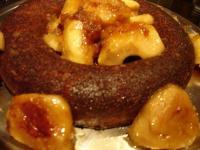 Type : Dessert
Difficulté : Moyen Préparation : 20 minutes Cuisson : 18 minutes Pour : 8 personnes
 Cet article vous est proposé par Certi'Ferme Cet article vous est proposé par Certi'Ferme |
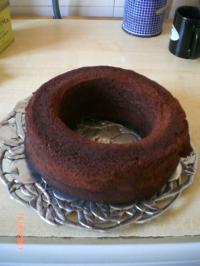 Type : Dessert
Difficulté : Moyen Préparation : 15 minutes Cuisson : 45 minutes Pour : 6 personnes
Cet article vous est proposé par Certi'Ferme |
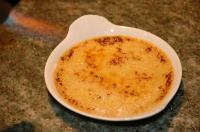 Type : Entrée
Difficulté : Facile Préparation : 30 minutes Cuisson : 45 minutes Pour : 4 personnes
Cet article vous est proposé par Certi'Ferme |
Узнать больше city exchange обменник
Cet article vous est proposé par Certi'Ferme |
Перейди на �айт компании — http://lipetskregionsport.ru/
Cet article vous est proposé par Certi'Ferme |
Indéniablement, la vitamine E est à la mode. Son excellente réputation n'est toutefois pas surfaite!
Un puissant facteur de protection cardiovasculaire Dans ce domaine, la vitamine E déploie de multiples actions, à savoir: - baisse le pouvoir d'agrégation des plaquettes impliquées dans le phénomène de la coagulation et lutte ainsi contre la formation de caillots, responsables de l'obstruction des artères et des veines. Seule ou en association avec l'aspirine, la vitamine E a fait ses preuves même dans le post-traitement de l'infarctus. Chez les personnes sujettes aux affections veineuses, elle prévient les phlébites et les thrombophlébites; - diminue le taux de LDL-cholestérol, le «mauvais» , dont l'excès se dépose sur les parois artérielles; - lutte contre les radicaux libres qui provoquent une dégénérescence se traduisant, au niveau des artères, par le durcissement de leurs parois (artériosclérose); - dilate les artères cardiaques, tout en diminuant les besoins en oxygène du coeur. Cela s'avère particulièrement bénéfique lors d'angine de poitrine, caractérisée par le rétrécissement des coronaires et une oxygénation insuffisante du muscle cardiaque. Une arme contre les rhumatismes Des études ont prouvé que la vitamine E possède, à fortes doses, une efficacité comparable à celles des antirhumatismaux classiques soumis à la prescription médicale (comme par ex. le diclofénac). L'action de cette vitamine est, dans ce cas aussi, liée à ses propriétés antioxydantes. Elle agit en neutralisant les radicaux libres qui, produits en quantité anormalement élevée lors d'affections rhumatismales, agressent et détruisent les cellules et les articulations non protégées. De par son action antioxydante ou antiradicalaire, la vitamine E intervient dans la prévention de toute affection dégénérative: outre l'artériosclérose et l'arthrose, déjà citées, le vieillissement prématuré, la cataracte, les maladie d'Alzheimer et de Parkinson, certains cancers, etc. Relevons également que cette vitamine aux mille vertus contribue au maintien en bon état de la peau, stimule le système immunitaire, lutte contre l'anémie, participe à la formation et aux fonctions des muscles… tout en soulignant qu'une telle liste n'est pas exhaustive! Le rôle des suppléments L'effet thérapeutique de la vitamine E dans les domaines ci-dessus se manifeste à doses élevées (minimum 200 mg par jour, voire 400 et plus). Or, l'apport moyen de cette substance par le biais de l'alimentation s'élève à 12 mg et ne peut être augmenté que difficilement à 50 mg, en forçant sur le germe de blé, les huiles végétales, les céréales complètes, les graisses et les fruits oléagineux. Préférez les suppléments contenant de la vitamine E naturelle, qui est mieux utilisée par l'organisme et, par conséquent, plus efficace. Rita Ducret-Costa, pharmacienne Cet article vous est proposé par Certi'Ferme |
Lucien Hanicotte, cofondateur des Maisons du diabète, présente son association lors d'une interview. La première Maison fut inaugurée en 1987 à Lille.
Cet article vous est proposé par Certi'Ferme |
|
Si l'aliment inquiète, parfois, il peut également rassurer en nous rappelant nos origines. Les « chasseurs cueilleurs » que nous étions, seraient ils en train de redécouvrir les bénéfices des végétaux ?
Cet article vous est proposé par Certi'Ferme |